What Causes Air Bubbles Under Paint Protection Film?
GET A QUOTE CALL (770) 722-3486You pick up your car after a fresh paint protection film installation, and as the sunlight hits the hood, you notice a few tiny bubbles under the surface. It is a frustrating moment, especially after investing in premium protection for your vehicle. The good news is that air bubbles under paint protection film are not always a sign of failure, and many of them are a harmless part of the process. Some, however, point to real installation or material problems that deserve attention. At LeJeune Ceramic Coating & Paint Protection, we help Atlanta, GA drivers understand the difference, because the city’s heat, humidity, and sudden weather shifts can influence how film settles. This guide explains what causes bubbles, which ones fade on their own, and when it is time to call a professional.
Are Air Bubbles Under Paint Protection Film Normal?
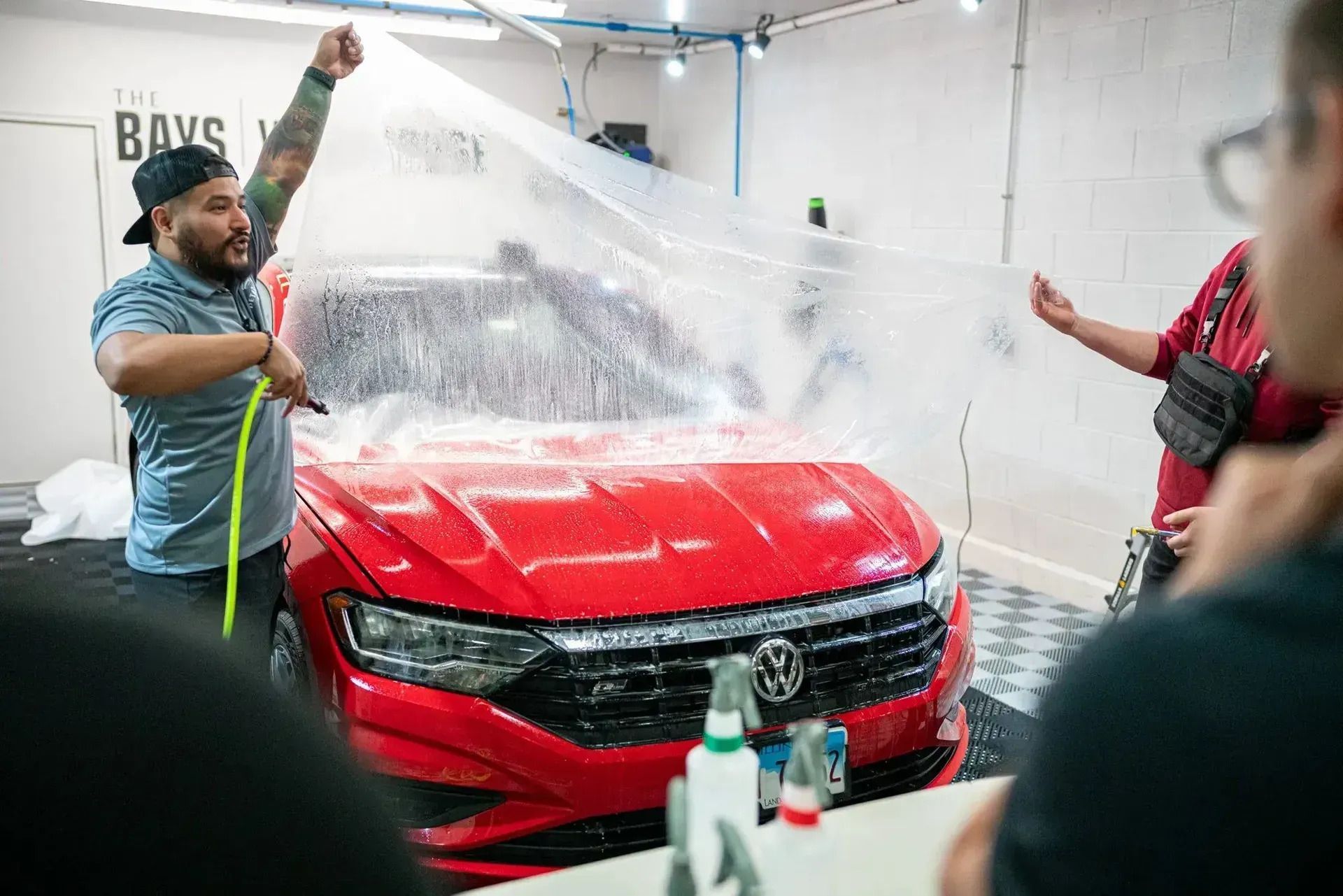
Small bubbles or hazy patches can appear right after installation, and in most cases they are simply leftover moisture from the application process rather than true air pockets. During installation, the film is positioned using a slip solution, and while installers squeegee out as much of it as possible, microscopic amounts can remain trapped between the adhesive and the paint. These moisture spots look cloudy or slightly wavy and usually shrink as the film cures over the following days. A true air pocket behaves differently, since it stays clear, holds its shape, and does not change over time. Knowing this distinction helps you set realistic expectations, because a properly installed film should ultimately look smooth, clear, and fully bonded to every panel. If you are still comparing options for your vehicle, you can learn more about our paint protection film services before deciding what is right for your car.
Common Causes of Air Bubbles Under Paint Protection Film
Bubbles rarely appear without a reason, and most of them trace back to a handful of installation and environmental factors that skilled installers know how to control. Understanding these causes makes it easier to judge whether what you are seeing is temporary or something that needs correction. Below, we break down the three most frequent sources so you can recognize them on your own vehicle.
Trapped Moisture and Slip Solution
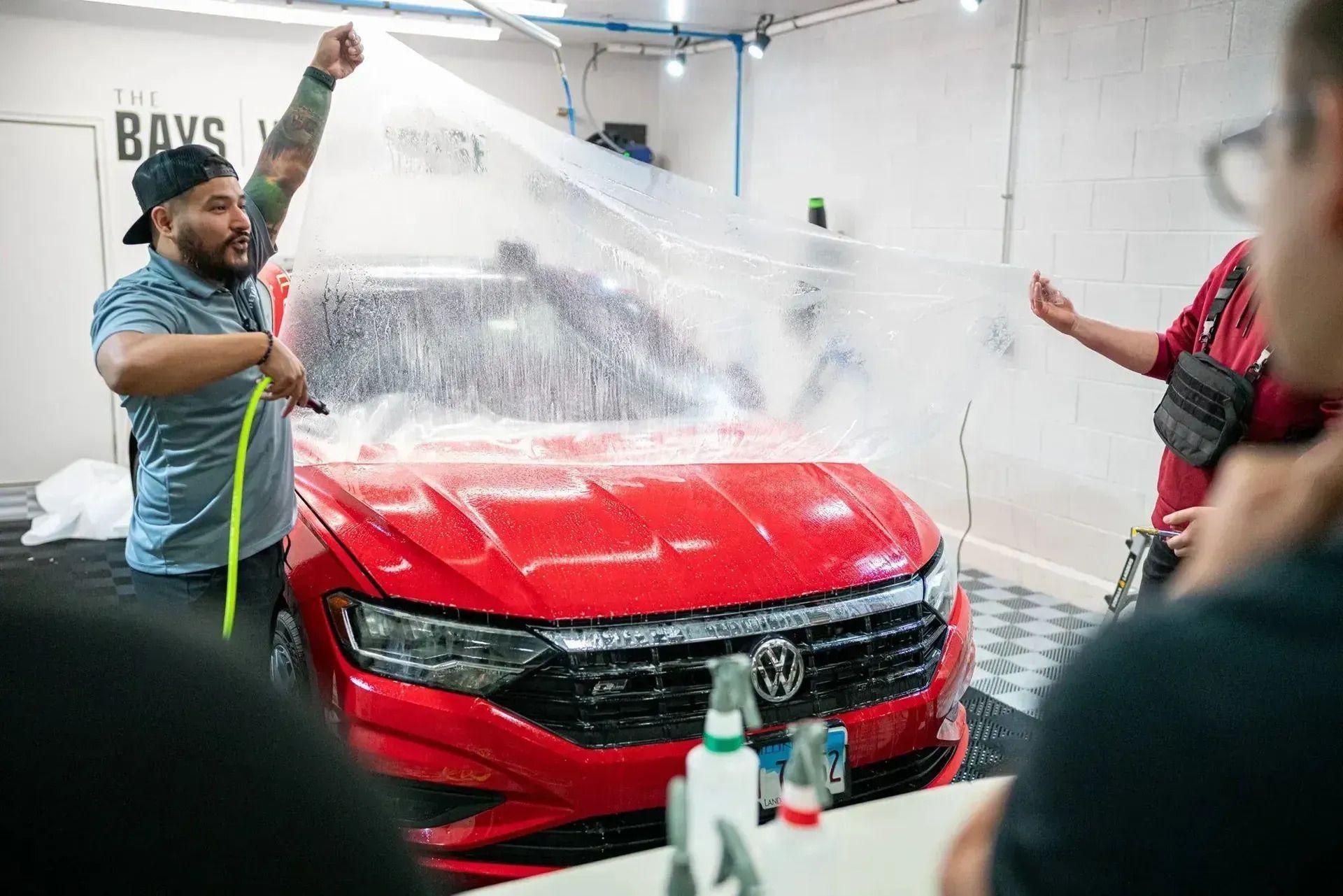
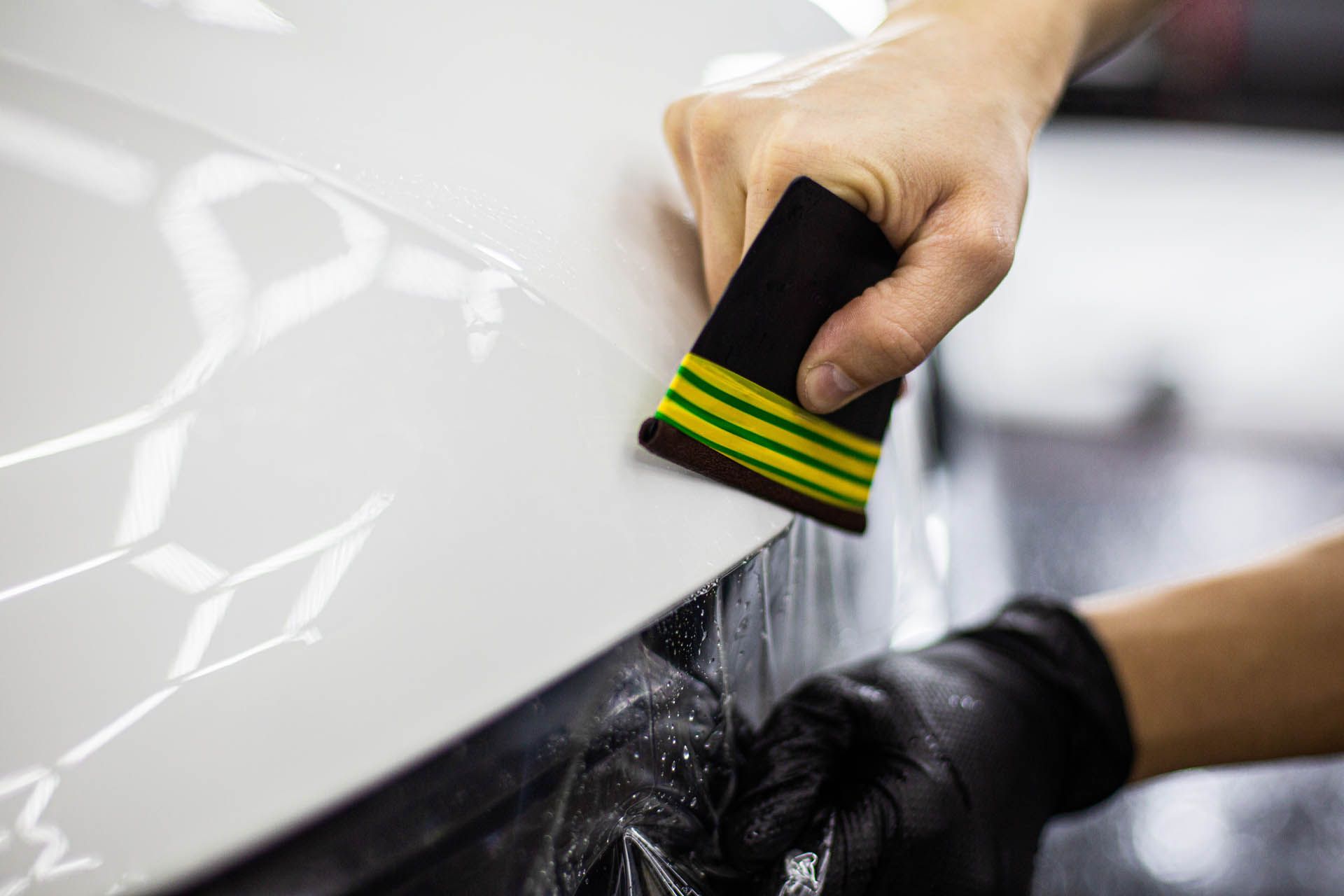
Slip solution is a mixture of water and a small amount of soap that allows the installer to slide the film into the exact position before locking it down. If the solution is not pushed completely out from under the film with firm, even squeegee strokes, tiny pockets of liquid remain behind and show up as hazy or watery blisters. These spots most often gather near edges, curves, and deep body lines where it is harder to apply consistent pressure. The encouraging part is that trapped moisture generally evaporates through the film over time, so these blisters tend to flatten out without any intervention. In Atlanta’s warm climate, that evaporation can happen a little faster, though very humid days may slow it slightly.
Improper Surface Preparation and Contamination
The paint underneath the film must be completely clean, because even a speck of dust, a strand of lint, or a trace of wax residue will create a raised spot once the film is applied over it. Poor washing, incomplete decontamination, or a rushed wipe-down before installation are the usual culprits behind these bubbles. Unlike moisture, a contamination bubble typically has a visible particle sitting at its center, and it will not shrink or disappear on its own. This is why a controlled, clean installation environment matters so much, since airborne dust in an open or poorly maintained space can settle on the paint in seconds. At LeJeune Ceramic Coating & Paint Protection, thorough preparation comes first, because the finish is only as good as the surface beneath it.
Installation Technique and Adhesive Issues
Technique plays a major role in how smoothly film lays down, especially on complex shapes like bumpers, mirrors, and fender edges. Uneven squeegee pressure, over-stretching the film on curves, or applying it under too much tension can cause it to lift or form bubbles days or weeks later as the material tries to return to its natural shape. Film quality matters too, because low-grade material or a weak adhesive may fail to bond evenly regardless of how careful the installer is. Surface temperature and humidity also affect how the adhesive grabs and cures, which is a real consideration in Georgia’s changing weather. Experienced installers account for these variables, choose quality film, and adjust their method to the conditions on the day.
Which Air Bubbles Disappear During the Curing Period?
Curing is the period after installation when the adhesive settles, the remaining moisture escapes, and the film fully bonds to the paint. During this time, small, hazy bubbles that contain moisture usually fade within a few days to a few weeks, depending on film type, panel shape, and weather. Atlanta’s warm, sunny conditions can help speed things along, while cool or damp stretches may extend the timeline a bit. To protect your investment during this stage, avoid washing the vehicle, skip the pressure washer, and keep your hands off the film until your installer says it is safe. Above all, resist the temptation to press, rub, or poke at a bubble, because this can crease the film, push moisture toward the edges, or damage the adhesive. Patience during curing is often all it takes for minor bubbles to disappear completely.
Warning Signs That an Air Bubble Is a Real Problem
Not every bubble will resolve itself, and learning to spot the ones that will not can save you from bigger issues down the road. A bubble that behaves differently from the normal curing pattern is usually telling you something about the installation or the film itself. The following signs are the clearest indicators that it is time to have the area looked at.
Bubbles That Grow or Spread
A small blister that stays the same size or shrinks is usually harmless, but one that grows larger or begins to spread across the panel is a different story. Expansion often means the adhesive is failing to hold in that area, allowing air or moisture to keep working its way under the film. If the bubble remains visible well beyond the normal curing window, it is unlikely to settle without help. Tracking the spot with a quick photo every few days gives you a simple way to see whether it is changing. If it is, contact your installer sooner rather than later.
Hard, Raised Bubbles With Visible Debris
A bubble that feels firm and has a dark speck at the center is almost always caused by contamination trapped during installation. These do not shrink with time because the particle physically holds the film away from the paint, and the spot will remain a permanent blemish unless it is corrected. Over time, the trapped debris can also create a weak point where dirt collects, and the film begins to separate. Because this type of flaw cannot cure away, it is best handled by a professional who can lift the film and remove the particle cleanly.
Lifting Edges, Wrinkles, and Silvering
When bubbles appear alongside lifting edges, wrinkles, or a silvery look around the affected area, the film is no longer bonding the way it should. Bubbles near edges are especially concerning because they can lead to peeling, which allows road grime, water, and wash chemicals to creep underneath. Ignoring these early warnings often leads to dirt buildup, discoloration, and eventually film failure that requires a larger repair or full replacement. Catching the problem early keeps the correction smaller, simpler, and far less costly.

When Should You Get Professional Inspection or Correction?
If bubbles persist beyond the recommended curing time, or if you notice any of the warning signs above, it is time to bring your vehicle back for a professional inspection. A trained installer will examine each affected area, determine whether it is moisture, contamination, or an adhesive problem, and decide whether to lift and reapply the film or replace a small section. Attempting to fix bubbles yourself with a needle or a heat gun is risky, since punctures can leave permanent holes and excess heat can warp, stretch, or discolor the film. Choosing an experienced Atlanta installer who stands behind their work makes a major difference, because proper correction restores both the appearance and the protective performance of the film. A professional fix done early protects your paint and keeps your finish looking exactly the way it should.
Ready for a Flawless PPF Finish in Atlanta, GA?
Air bubbles under paint protection film are often temporary, but knowing what causes them and when they signal a deeper issue helps you protect your vehicle with confidence. If you are noticing bubbles that will not go away, or you want a clean, precise installation from the start, the team at LeJeune Ceramic Coating & Paint Protection is ready to help Atlanta drivers get a smooth, clear, and properly bonded finish.
Professional installation helps minimize trapped moisture, contamination, lifting edges, and other imperfections that can affect the final appearance. Careful surface preparation and precise film placement also support stronger adhesion and a cleaner finish across every protected panel.
Contact us to discuss your PPF needs and keep your vehicle protected on Atlanta roads.